There is a specific moment every year when Easter stops being just a date on the calendar and becomes a feeling. It doesn’t arrive with fanfare—it creeps up on you. It’s the afternoon light stretching out, the air shifting, the craving for good things naturally returning.
And then there’s a sign: a scent you recognize even with your eyes closed. Citrus, a warm oven, and that unmistakable note of orange blossoms (neroli). It’s the scent of the Pastiera, the Easter dessert that needs no introduction, because it’s already part of the collective memory.
What Pastiera Really Is (Beyond the Definition)
Saying “Pastiera” is easy. Explaining it is almost pointless, because it’s one of those desserts you just recognize. It has a presence all its own: elegant, composed, never excessive.
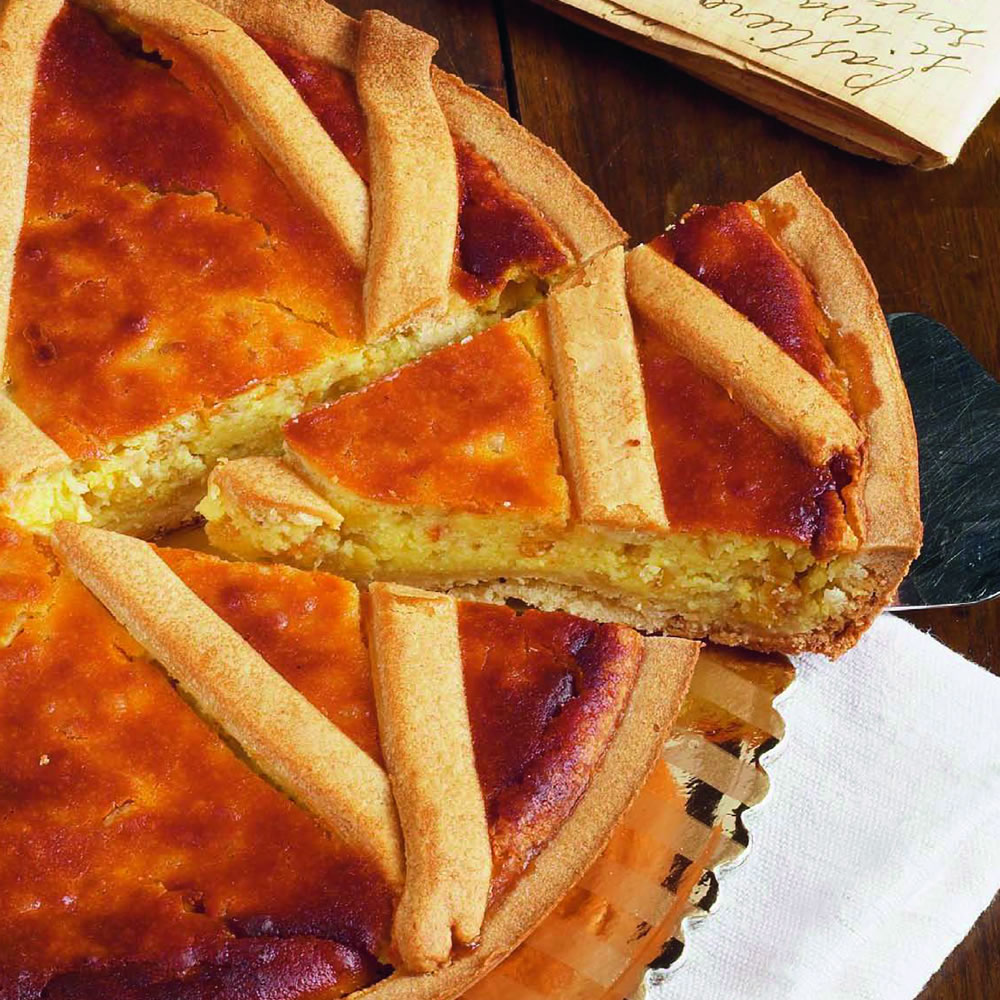
The base is a cradle of fragrant shortcrust pastry. On top is a soft yet structured filling, where softened and cooked wheat, cow’s milk ricotta, sugar, cubes of candied fruit, and the aroma of orange blossom water (neroli) come together. It is a delicate balance, and precisely for this reason it is a “serious” dessert: if you overemphasize one element, you lose the magic.
Signature ingredients and a “balanced” flavor
The traditional Pastiera should not be cloying or overpowering. A good Pastiera is harmony: the ricotta should be present but not heavy, the wheat should provide texture without becoming “mushy,” the candied fruit should punctuate the flavor without stealing the show, and the neroli should leave its mark on the aroma without overpowering everything
When the balance is right, something simple and beautiful happens: one slice calls for another.
The Legends of the Pastiera: Atmosphere, Not Nostalgia
Surrounding the Pastiera are legends, stories, and images that seem to emerge from an old kitchen bathed in sunlight. Convents, springs, symbols, rituals: each version adds a detail that isn’t meant to “prove” anything, but to create atmosphere.
And ultimately, that is the point: the Pastiera is a symbolic dessert. It lives not only by its recipe, but by the season. It is a dessert that carries with it an idea of rebirth, of new light, of a shared table. That is why it works so well just before Easter: because it puts people in the right frame of mind.